Field notes from a Provence shoot
A few weeks ago we released the Provence 360° VR Experience — or VRX, as we usually call it. What you don’t see in those finished 12 minutes is the production behind it — the scouting, the long shoot days, the post-production decisions. This post is a look back at how that experience came together.
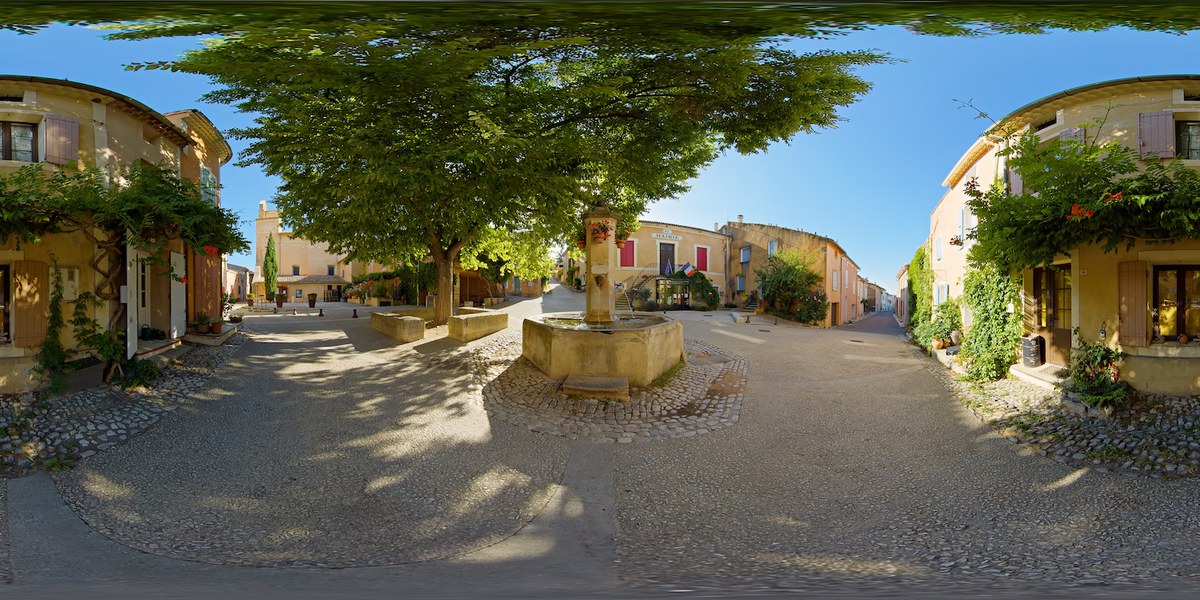
The trip in numbers
We scouted a large area and filmed more than 34 locations across Provence, of which 23 were chosen for the VR Experience. Geographically the trip stretched from the Verdon Gorge in the east to the Mediterranean coast around Marseille and Cassis in the south, north to the lavender plateaus of Sault and Valensole, and up to the summit of Mont Ventoux at 1,910 metres.
What looks effortless in the finished VRX took days of driving, hiking, and waiting for the right light.
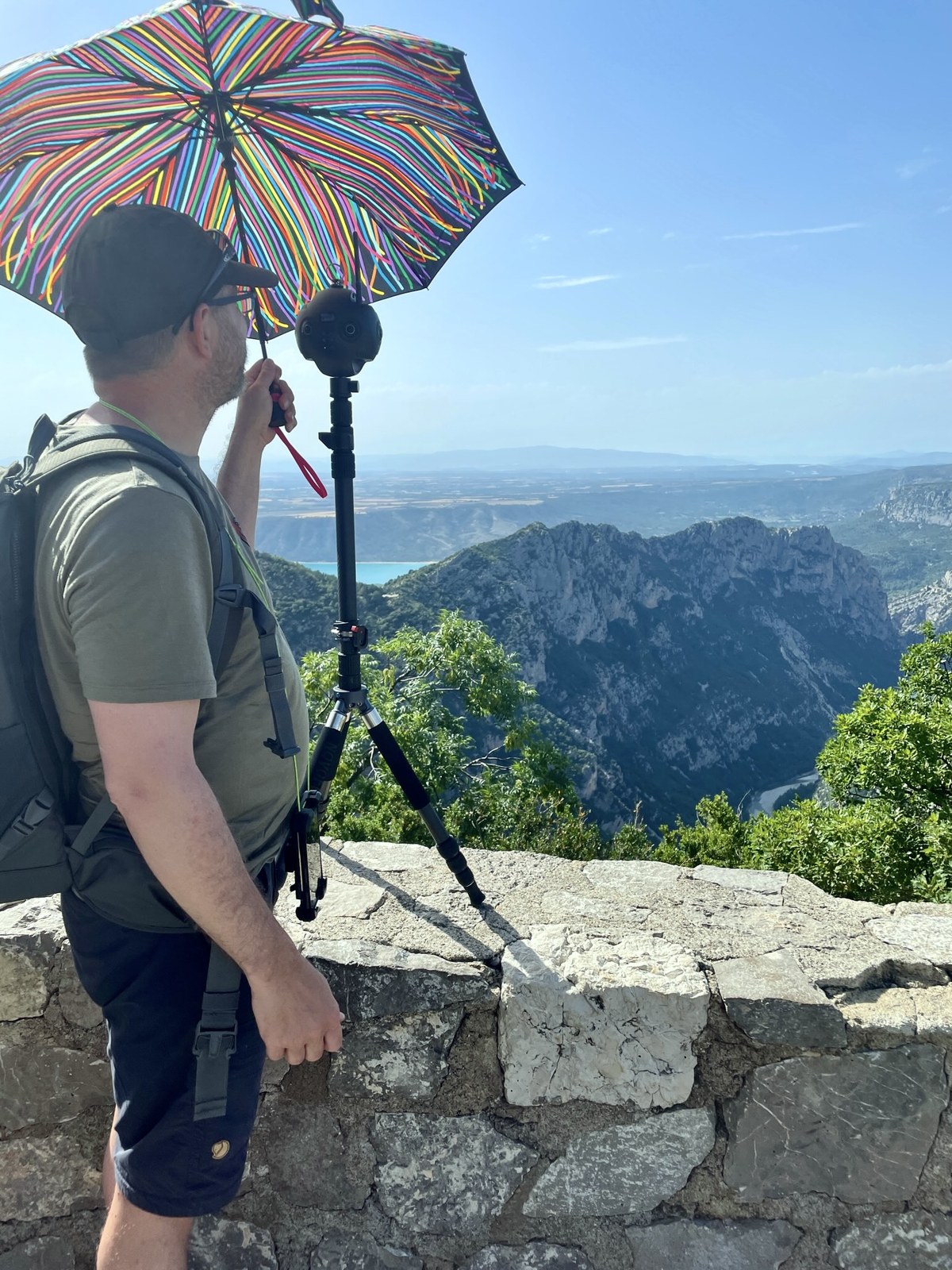
The drive into the Verdon Gorge deserves its own mention. The road in is narrow, twisty, and in some sections clings to the cliff so closely that meeting an oncoming car becomes a small negotiation. By the time you’re standing at the viewpoint with the camera, you’ve already earned the shot.
On foot, not from the air
Every viewpoint in the Provence collection was reached on foot, by car, or by bike — never by drone. We’ve written about why we don’t use drones in more detail before, but the short version is: drone height can trigger anxiety in 360° videos, especially when experienced in a VR headset; drone movement triggers motion sickness; and drone noise contaminates the natural soundscape we work hard to capture. None of that fits a 12-minute relaxation experience.
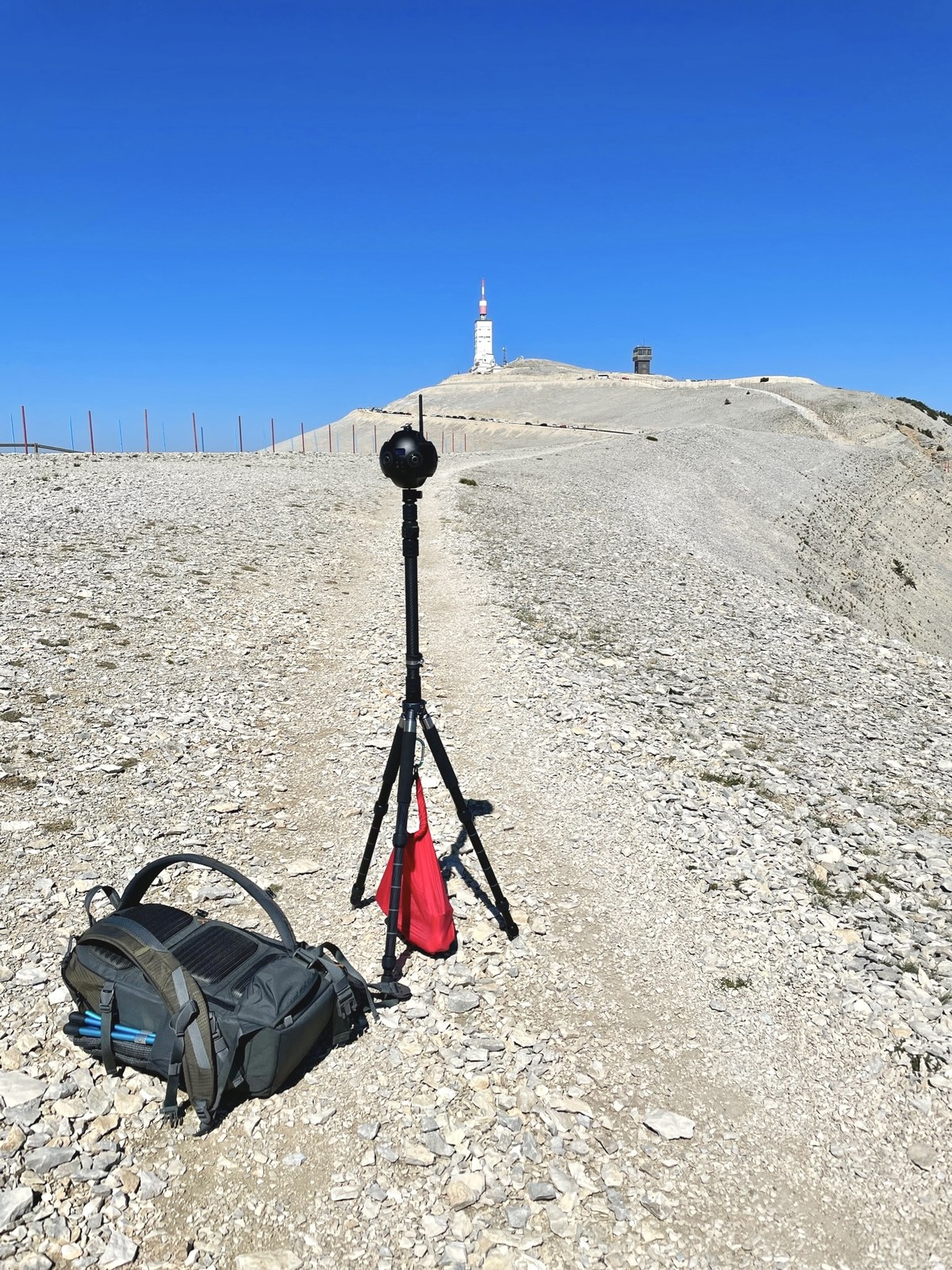
The Mont Ventoux summit was reached by car — the only practical way to get up to 1,910 metres with the camera kit, unless you happen to be one of the thousands of road cyclists who climb the Tour de France-famous mountain every summer.
The microphone next to the camera
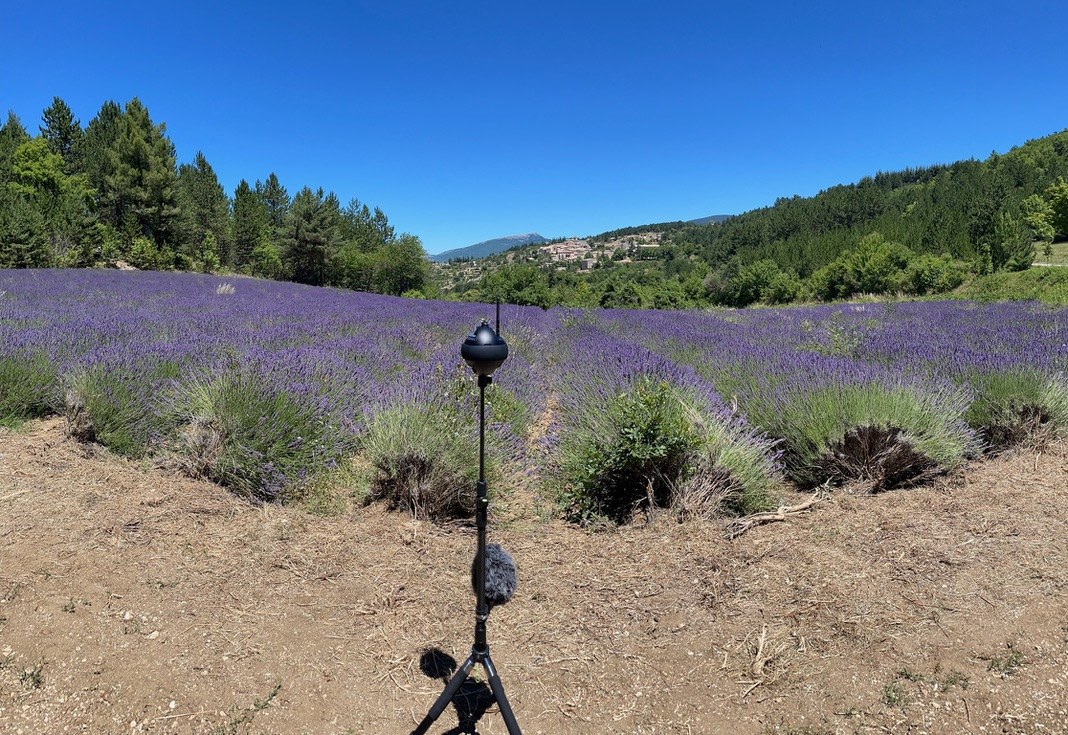
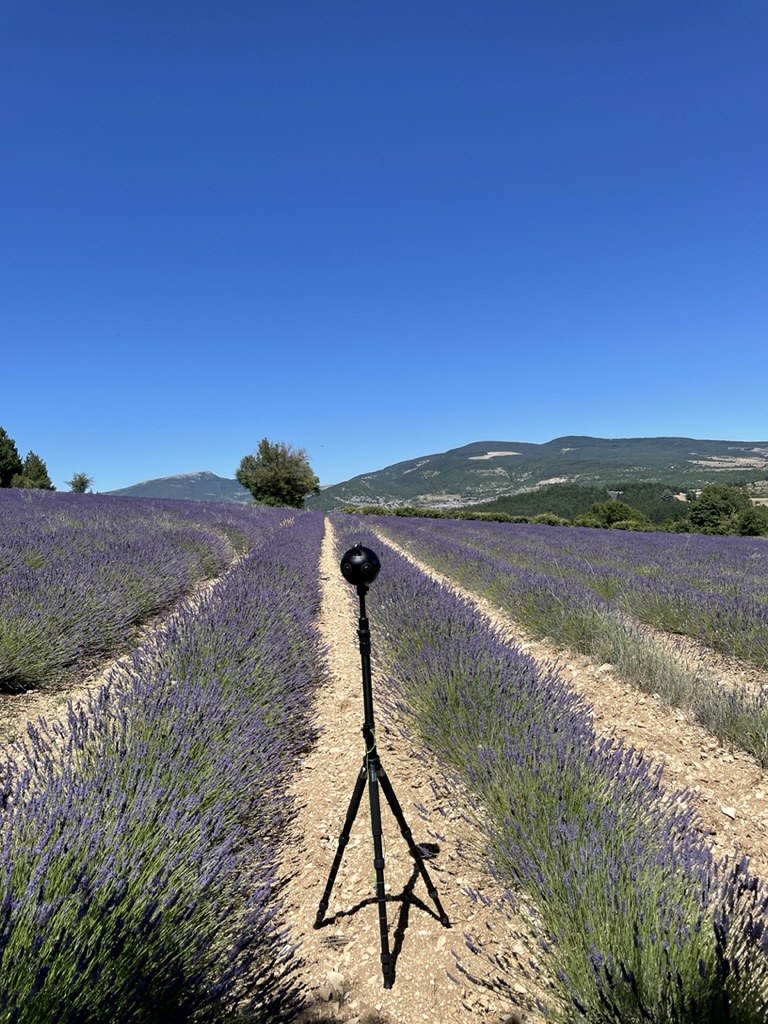
Almost every scene in the Provence collection was recorded with audio at the same time as the video, with the microphone next to the 360° camera on the same tripod. Where it wasn’t possible to record synchronous audio, we waited until the conditions were right or found a nearby spot with similar sounds.
Provence turned out to be unusually rewarding for sound recording. The wide, open landscapes meant very few human-made interruptions: almost no cars, no motorcycles, no aircraft. What we got instead was the near-omnipresent layer of cicadas in the olive groves and lavender fields, the wind moving through pines along the Verdon, and the soft wash of water along the Mediterranean coast. In some recordings the cicadas are so dense they almost become a single texture — the sound of a hot afternoon in the south.
In the post-production of this trip we didn’t have to resort to stock sound libraries because we got so many great recordings on location. The raw material from these recordings is what gets layered later, in post-production, with the specially composed piano score that runs through the VR Experience.
Scouting the lavender
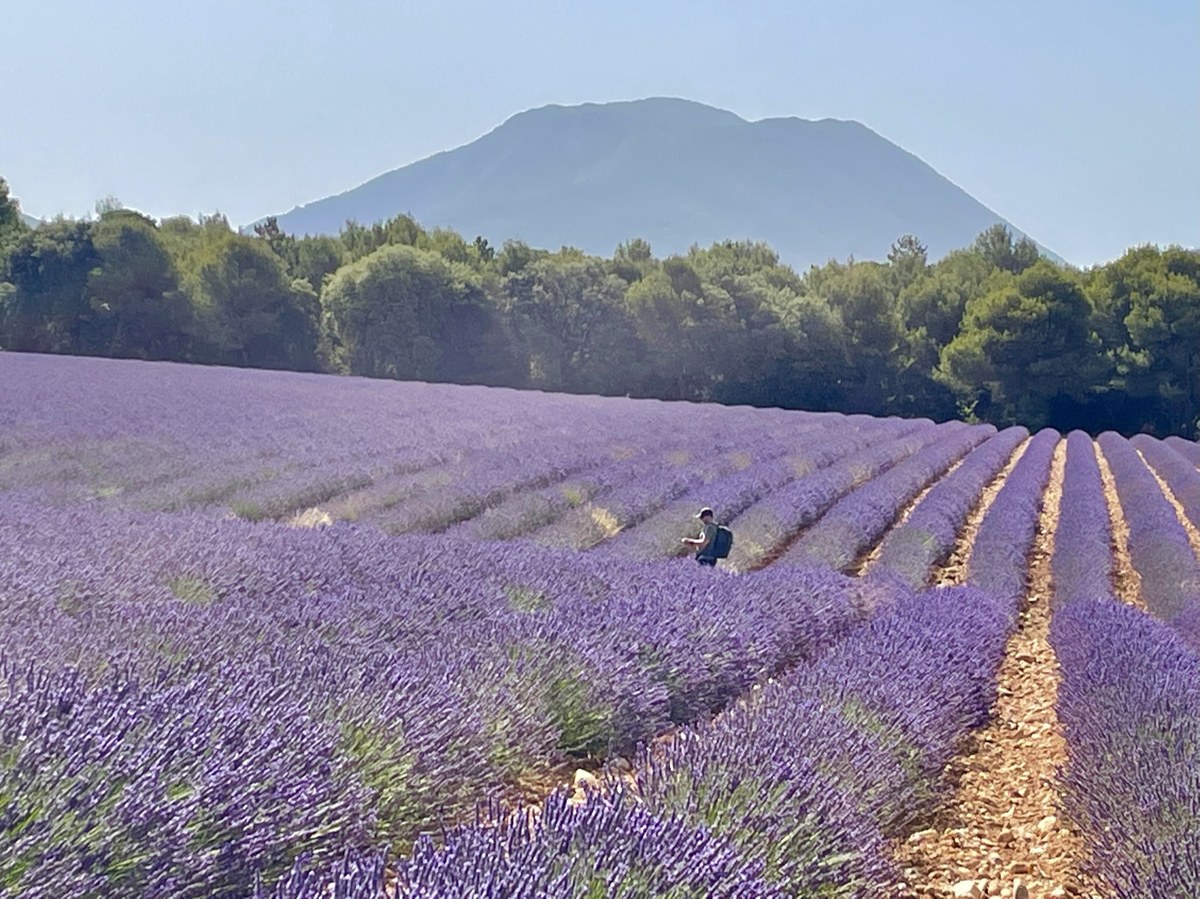
The lavender bloom is short. While we could plan the rough season — late June into mid-July, depending on altitude — the specific fields had to be found on sight, by driving slowly through the back roads of the plateau and stopping when something looked right. Some fields were already past their peak. Some had been cut early. Some looked perfect from the road but turned out to be small or crowded with daytime tourists or photographers.
The fields that made it into the VR Experience were the ones where everything came together: the bloom at full intensity, the surrounding landscape clean of distractions, the light at the right angle, and a way to position the camera deep enough into the rows that no path or fence intruded on the 360° frame.
The coast around Cassis
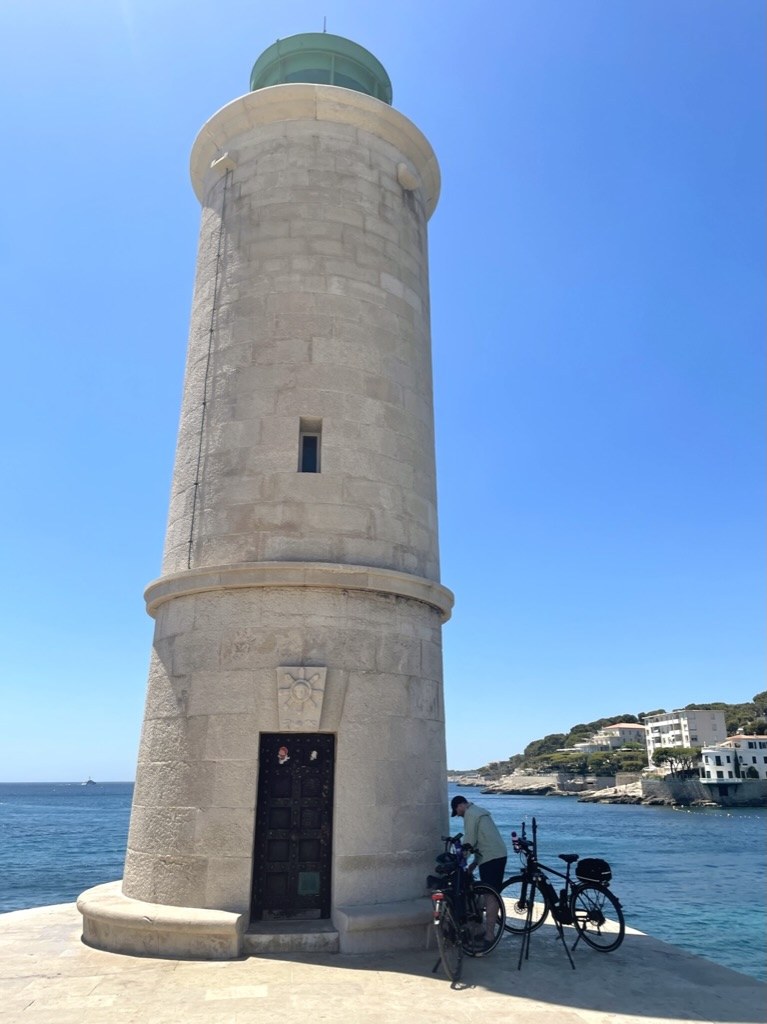
The coastal scenes around Cassis were reached entirely by eBike — and there’s a good reason for that. The coastal roads in this area are narrow, the parking situation in summer is brutal, and the lighthouses, calanques and small harbours are spread out along a stretch where stopping a car every kilometre simply isn’t practical. With bikes, the calculation flips — you stop where the shot is, not where the parking allows.
This particular lighthouse at the entrance of the Cassis harbour was one of those stops. Bikes parked, equipment being set up — the lighthouse, the seawall, and the sound of water against the breakwater all waiting for the recording to start.
What happens after the shoot day
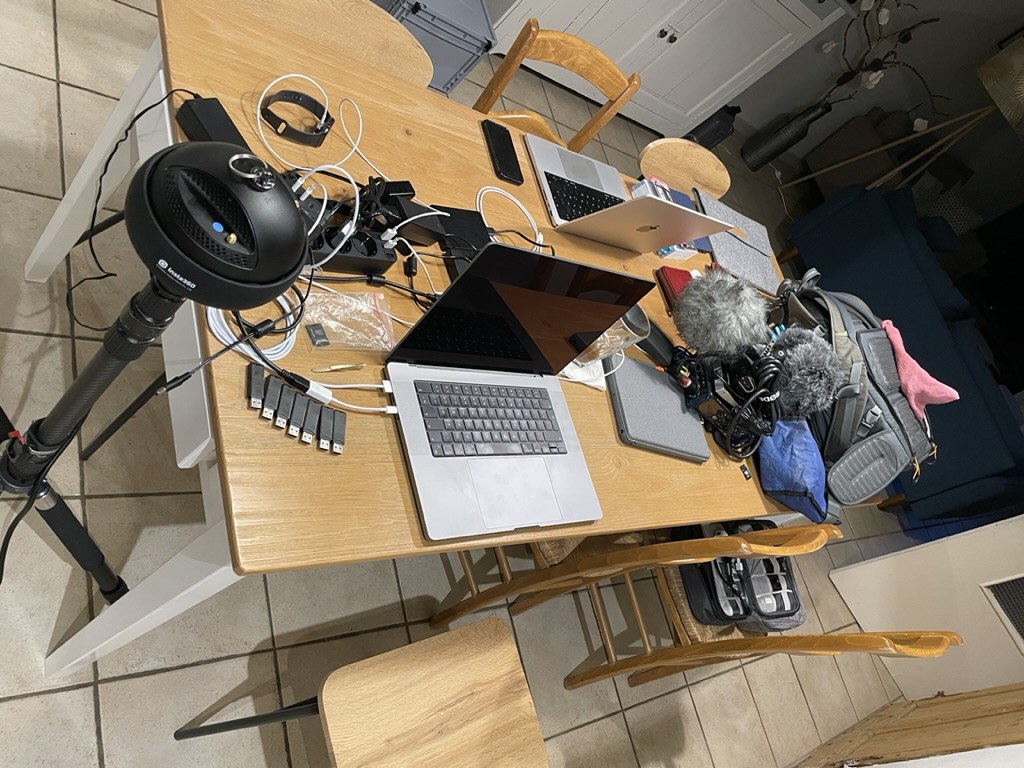
One thing that almost never gets shown about location-based 360° production is what happens after the camera goes back in the bag. The shooting day might end at sunset, but the production day continues into the evening — and that part of the work is just as important as what happens with the camera in hand.
Every evening, back at the rented house, the same routine: copy and back up the day’s video and audio files, log and annotate each scene while the memory of the location is still fresh, format SD cards for the next day, charge every battery for camera and audio recorder, and prepare and publish that day’s social media posts. They go out the same evening because the next morning the camera and we are out again — there’s no time the next day to come back to them.
None of this is visible in the finished VRX. But it’s what makes the next shoot day possible.
What couldn’t stay in frame
Even with careful scouting and timing, the original captures are not the final scenes. Lavender fields in peak bloom are popular. The hero scene of the Provence collection — the wide lavender field with a single tree on the rise and rows of lavender stretching into the distance — was originally captured with people walking through the field.
Here’s the unprocessed iPhone reference shot from the day:
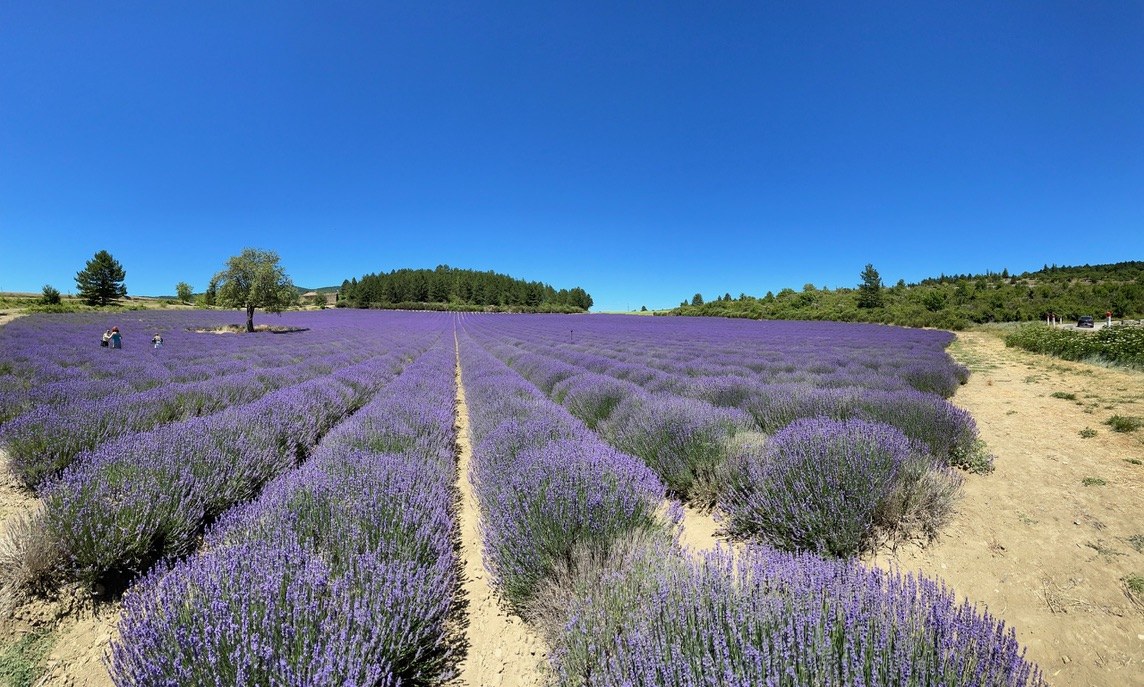
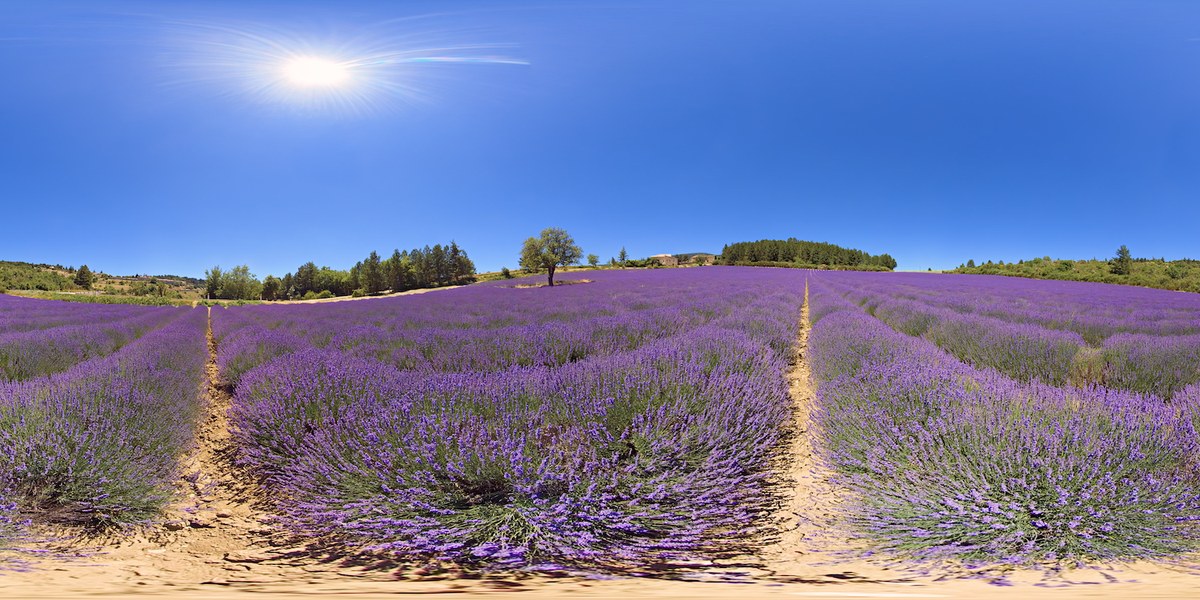
The visitor removal isn’t cosmetic — it’s central to the purpose of the experience. Someone using the Provence VRX in a relaxation setting, a senior care facility, or a corporate wellness room is supposed to step into Provence alone. The relaxing effect depends on it. Encountering other people — even in the periphery — breaks the sense of having quiet, private space.
Research has shown that watching 360° nature videos in a VR headset is significantly more relaxing than watching the same video on a regular screen, and that virtual nature can be just as effective as real nature for relaxation. But that effect depends on the content delivering on its premise — and that, in turn, depends on the kind of decisions that come from having the end-user in mind throughout the entire production chain, not just at the end. An algorithm can render a beautiful field of lavender, but it can’t decide that distant figures need to be removed because of how a stressed manager will feel during minute eight of their break.
What came out of it
23 of the scenes from this trip were edited into the Provence 360° VR Experience. All 34+ scenes are also available individually as royalty-free 360° stock videos at atmosphaeres.com/region/provence for licensees who prefer to use specific environments or assemble their own edits.
More field notes like this will follow as we finish the next trips. If there’s something specific you’d like to see covered — equipment, sound, post-production, location scouting — just let us know.

 RSS - Posts
Leave a Reply